

Have you ever started working with a new client, and after a few sessions, found yourself in a quagmire of chaos with that person?
Not every person that needs your services is a good fit for your services. They might be a good fit for the same services from somebody else, but not necessarily your practice. Whether it’s punctuality, expectations around outcomes, readiness to change, or simply communication style, there are a myriad of reasons that somebody just might not fit into your business as a client.
Here is a three-prong test to check all clients against that can help you curate an ideal clientele:
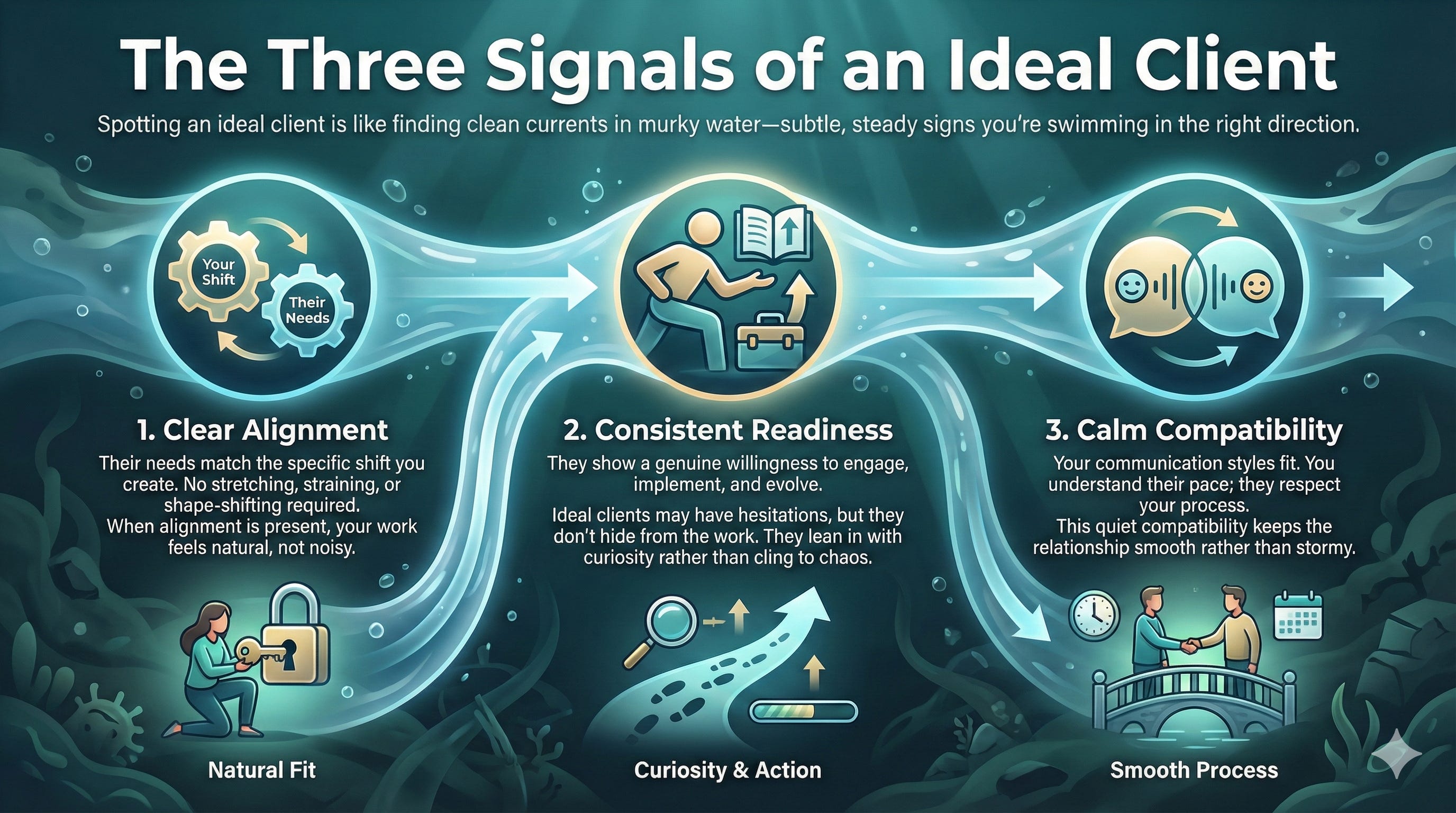
Clear Alignment
Ideal clients fit easily into the work that you do. You don’t need to create new procedures, set new expectations, or do work outside your area of expertise. There is a specific transformation that you aim to create for the people you work with, and the client understands this and slots perfectly into the shift you can help create for them.
When there is alignment, the sales closing process becomes easy, seamless. The client doesn’t really need to be convinced of the solution they need. You simply need to articulate the shift you create, and they immediately recognize that it’s what they need.
When there is clear alignment, there is no scope creep. Their needs align with your skills and expertise, and they don’t start requesting that you stray outside of your lane. This produces operational efficiency, too, because you’re not spending time creating new processes or learning new skills in order to accommodate one-off client requests.
Ideal clients arrive with expectations that match the outcomes you can create for them. The two of you meet together where you’re both at in order to make the magic happen.
Consistent Readiness
Ideal clients are ready to do the work. They willingly engage with your process, instead of just admiring what you do without active participation. Their questions come from a place of genuine curiosity and an intent to do what you recommend, not just admiring your process from shore. They do their exercises between sessions, practice the techniques you teach them at home, compile the documents you need them to bring in.
Ideal clients don’t need to be perfect. They merely need to demonstrate that they are engaging in your process, creating momentum. They reply to your messages, reflect when prompted, and actually implement the work product you give them. If they hit a snag, which they will, then they regroup instead of retreat. Their participation helps keep momentum going, and allow your business systems to function the way you intended.
They show up on time for appointments, and you don’t have to chase them down for their next session or for responses. You don’t find yourself constantly need to re-triage their situation, they energetically move with you towards the transformation you facilitate for them. They’re not just driftwood moving with your currents, but active swimmers that collaborate with you to get where they need to go.
Calm Compatibility
Your working relationship with an ideal client is a far cry from working with incompatible clients. There is a rhythm to your work, rather than a storm surge. There is clear communication back and forth, reasonable expectations established, and predictable pacing. Both of you navigate the waters of your engagement without a sense of rushing, chaos, or misinterpretation.
While some of us may process information in different ways, there is an effort made to reach understanding in a cool, calm, and collected manner. Boundaries are respected, instructions are followed, and there is an ease to how the collaboration flows.
Ideal clients respect your time, your fee structure, and your payment policies. When there is compatibility, there is good communication flow, with fewer clarifications and corrections required. Depending on what kind of work you do, you may inherently be working with people in crisis, but your working relationship with the client shouldn’t be a source of additional crisis for either of you.
In short, you simply work well together, rather than experiencing constant friction and chaos from the working relationship itself — again, even if the client themselves is in some sort of crisis.
Discernment Prompts
Does working with this person feel aligned with my values and capacity?
Does this person’s core need clearly match the specific shift my work delivers?
Does this prospective client exhibit the follow-through that I expect?
Does communicating with this client feel choppy and draining, or calm and comfortable?
If every client were like this one, would my practice feel sustainable or stormy?